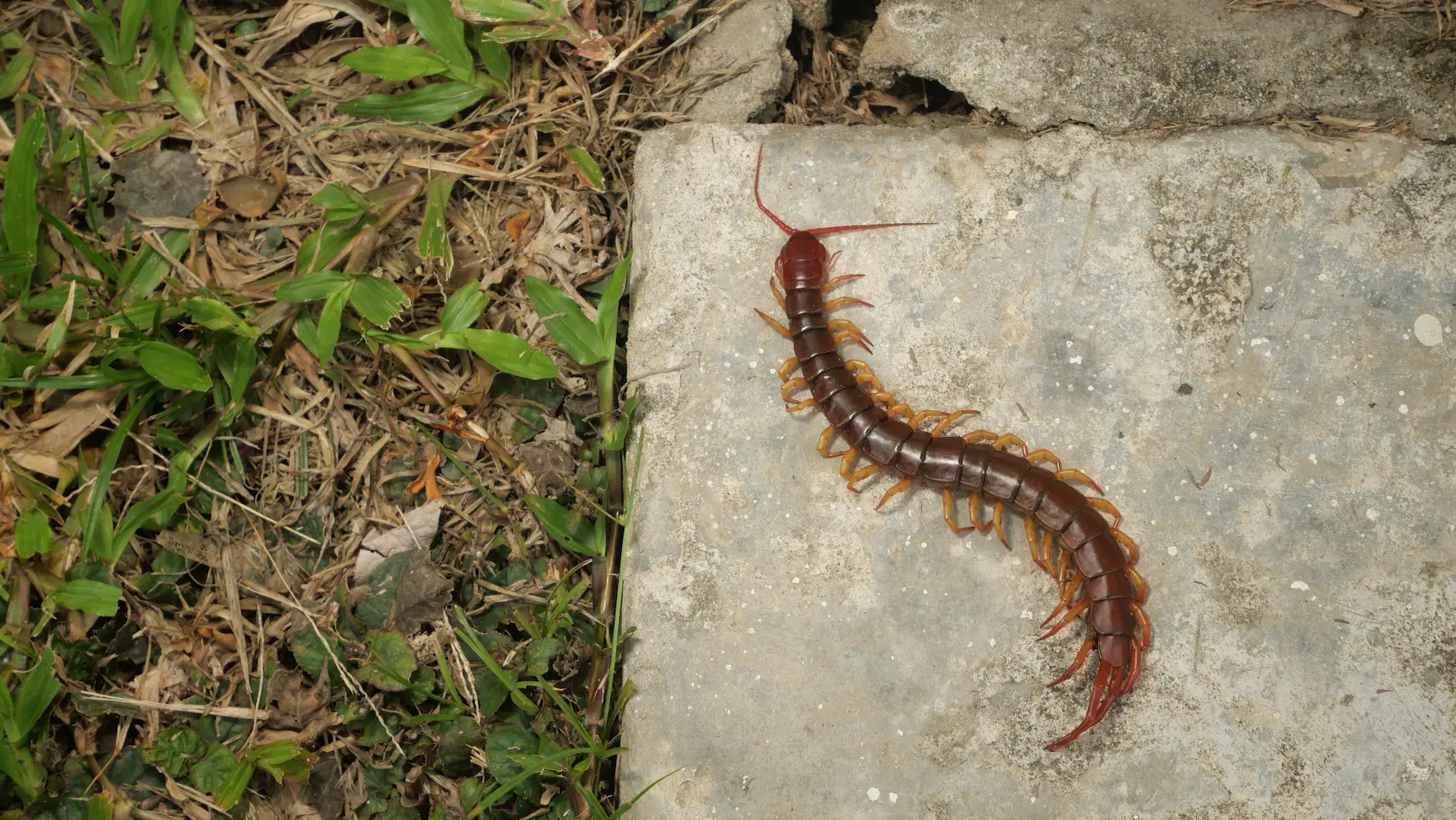
Finding a centipede scurrying across your bathroom floor or kitchen counter can be an unsettling experience. These fast-moving, many-legged creatures easily catch anyone off guard. That’s why Sorko Lawn and Pest Control offers comprehensive centipede control services designed to eliminate current infestations and prevent future ones.
You work hard to make your house a comfortable place to live. Unfortunately, centipedes think so, too! Central Florida’s warm, humid climate creates the perfect environment for centipedes to thrive year-round.
Sorko Lawn and Pest Control’s trained technicians have the local expertise to provide effective house centipede control solutions.
Our Professional Centipede Control Services
These moisture-loving predators are constantly seeking out damp areas in your home to hunt for their next meal. Sorko Lawn and Pest Control’s certified experts will examine your property, identify the conditions that attract centipedes, and create customized treatment plans that provide long-term protection.
We develop custom treatment plans based on your specific needs and offer a 24-48 hour response time when requested. And our team uses environmentally conscious solutions and provides free follow-ups for your satisfaction.
Most Common Centipedes in Central Florida

The house centipede is the most frequently encountered species in Central Florida homes. These yellowish-gray creatures have distinctively long, banded legs that make them appear much larger than they actually are.
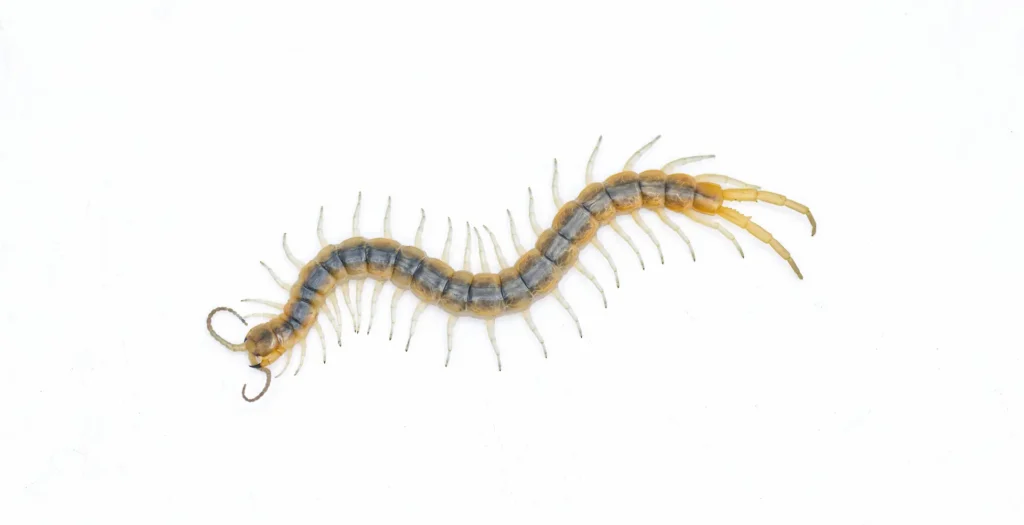
The Florida blue centipede is another common species found throughout Central Florida. These centipedes have a bluish-gray coloration and typically grow between two and three inches long.
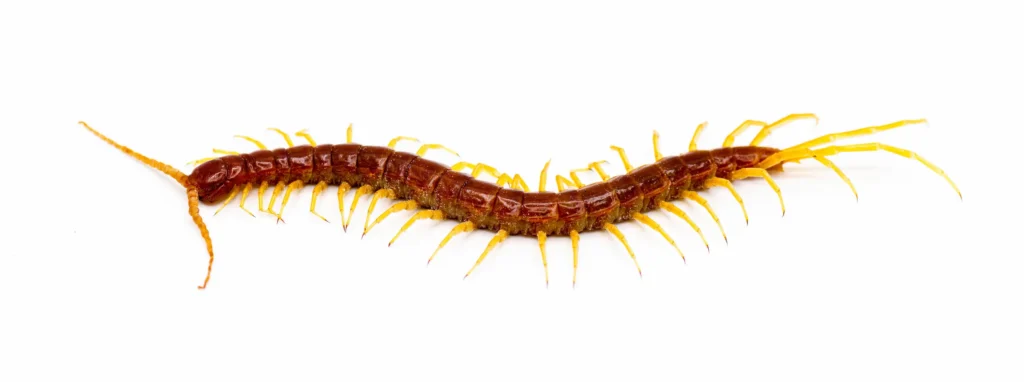
The Eastern red centipede (sometimes called the bark centipede) rounds out the trio of types most often seen in our area. This reddish-brown species tends to hide under bark, rocks, and debris, but can make its way indoors through cracks and gaps in your home’s foundation.
Each of these species has unique habits and preferences, which is why proper identification is key to effective treatment. Our technicians are equipped to identify and manage any type of centipede issue you might encounter in the Sunshine State.
Ready for pest, lawn, or sprinkler service?
Ready for qualified professionals to help keep your home, business, or lawn in pristine condition?
Where to Look for Them in (and Around) Your Home
If you’re trying to figure out where to look for centipedes, the answer almost always involves moisture. This means they’re drawn to the dampest areas of your home and property.
- Inside your house, bathrooms are prime centipede territory.
- Basements and crawl spaces also attract centipedes because these areas tend to be cooler and more humid than the rest of your home.
- Kitchens offer another attractive environment, particularly under sinks, where small leaks or condensation can create damp conditions.
- Laundry rooms with their combination of water, warmth, and humidity are also common centipede hangouts.
- Don’t overlook your garage, especially if it connects directly to your home.
- Around the exterior of your home, centipedes hide under mulch beds, leaf litter, rocks, and landscape timbers.
Are They Harmful (or Poisonous)?
It’s a fair concern given their alarming appearance. For the average healthy adult, centipedes are usually not harmful. However, children and people with compromised immune systems may experience more significant reactions to centipede bites.
Technically, centipedes are venomous rather than poisonous. This distinction matters: poisonous creatures cause harm when you touch or eat them, while venomous creatures inject toxins through a bite or sting. Centipedes have modified front legs called forcipules that they use to inject venom into their prey.
For most people, a centipede bite is comparable to a bee sting. The bite site may become red, swollen, and painful for a few hours to a few days.
How to Get Rid of (and Prevent) Centipedes
- Reducing moisture is the single most important step. Fix any leaky pipes, improve ventilation in bathrooms and basements, and consider using dehumidifiers in particularly damp areas.
- Removing their food source helps significantly. Centipedes eat other insects, so addressing any underlying pest problems will indirectly reduce your centipede population.
- Sealing entry points is another crucial component when figuring out how to get rid of household centipedes. Inspect your foundation for cracks and seal them with appropriate caulk or mortar.
- Install door sweeps on exterior doors, especially garage doors, and make sure window screens are intact and fit tightly. Weather stripping around doors and windows closes gaps that centipedes can exploit.
Over-the-counter insecticides can kill individual centipedes on contact, but they rarely solve the underlying problem. The truth is that professional intervention typically produces the best results. Sorko Lawn and Pest Control’s technicians understand centipede behavior and biology, allowing us to target our treatments for maximum effectiveness. We know where centipedes hide, how they enter homes, and what conditions they need to survive.
Professional Centipede Extermination by Sorko Lawn and Pest Control
Don’t let centipedes disrupt your home. While you may only be dealing with one issue today, Central Florida’s climate means these pests are a constant threat.
Sorko Lawn and Pest Control’s centipede control experts have the local expertise to understand this complex pattern, providing solutions that are both tactical for your current problem and strategic for future prevention.
Contact us today to schedule a comprehensive inspection! Let our experts create a targeted treatment plan to keep your home protected and comfortable.