
Florida’s blend of dense residential areas and natural environments creates constant opportunities for rats and mice to seek shelter, food, and water indoors. If you’ve heard suspicious noises in your walls or attic and are concerned, you need to know which of the common types of rats and mice in Florida might be attempting to establish a presence on your property.
It’s important to know that while many native rodents exist, only a select few are truly adapted to living inside human structures. Sorko Lawn and Pest Control in Central Florida has prepared this guide to help you quickly identify the specific species responsible, how they gain entry, and what your next steps should be.
Common species of mice in Florida include:
- House Mouse (Mus musculus)
- Cotton Mouse (Peromyscus gossypinus)
- Deer Mouse (Peromyscus maniculatus)
- Oldfield Mouse (Peromyscus polionotus)
Common rat species in Florida include:
- Norway Rat (Rattus norvegicus)
- Roof Rat (Rattus rattus)
Ready for pest, lawn, or sprinkler service?
Ready for qualified professionals to help keep your home, business, or lawn in pristine condition?
Which Rats and Mice Are You Most Likely to Find in Your Home or Business?
The vast majority of Florida’s native mice and rats prefer their outdoor habitats. With few exceptions, rat and mice infestations come exclusively from these three species that have perfected suburban living. If you have an indoor rodent problem, it is almost certainly one of these:
1. Norway Rat
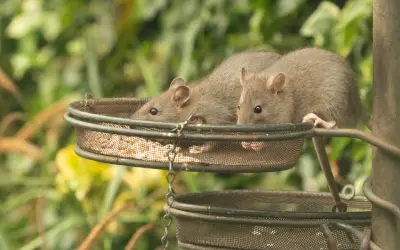
Also known as the sewer rat, wharf rat, or brown rat, this species is the stout, ground-dwelling type known to enter structures at the lowest level.
- What they look like: They have a robust build, with thick, shaggy brown-to-grey fur, a blunt nose, and small ears. Their most distinct marker is a thick, scaly tail that is shorter than their body and head combined.
- Common hiding spots: They are ground dwellers, preferring cool, moist environments. Look for them in basements, sewers, crawl spaces, under porches, and in burrows they dig beneath concrete slabs or foundation edges.
- How they get in: They usually enter structures at or below ground level through large foundation cracks, drainage pipes, and unsealed gaps around utility lines where they emerge from their burrows.
- Distinct Clue: The sounds are heavy, dragging, and loud, typically heard from lower-level walls and floors as they travel along pipes and beams near the foundation.
2. Roof Rat
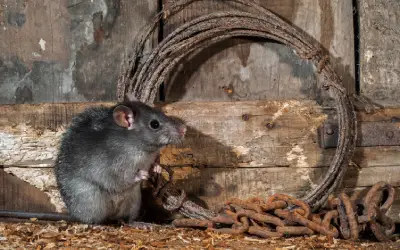
This agile, highly mobile, climbing species is also known as the black rat, ship rat, or fruit rat, and is the primary source of upper-level and attic infestations in Florida.
- What they look like: They are sleek and slender, with a pointed nose, large, prominent ears, and a thin, sensitive tail that is longer than their body and head combined. Their coat color varies, ranging from black to brownish-grey.
- Common hiding spots: They are excellent climbers, preferring high-up spaces like attics, ceilings, wall voids, and stored boxes.
- How they get in: They use vertical access points like trees, fences, and power lines, entering structures via gaps in the fascia, soffit vents, roof vents, or chimney flashing — any opening the size of a quarter or larger.
- Distinct Clue: Look for high-up evidence. Finding dark, oily rub marks along rafters, ceiling pipes, or electrical conduits high in the attic indicates their frequent travel paths.
3. House Mouse
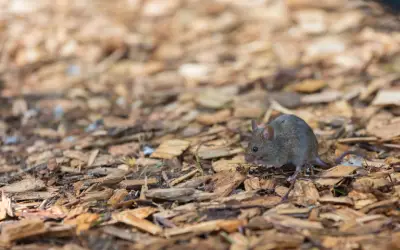
The tiny, ubiquitous house mouse is the most widespread rodent pest, defined by its ability to live undetected while exploiting the smallest structural weaknesses.
- What they look like: Small and grayish-brown, the house mouse has a pointed nose, large ears relative to its head size, and small eyes. They are uniformly small, measuring only a few inches long, excluding the tail.
- Common hiding spots: They live behind appliances, inside kitchen cabinets, within stored boxes, and inside furniture — always remaining close to a reliable food source.
- How they get in: They can slip through a gap the size of a pencil’s width (about 1/4 inch). Unsealed plumbing gaps under sinks or small cracks near the foundation are frequently utilized points of entry.
- Distinct Clue: The most definite sign is the droppings. They leave behind hundreds of tiny, black, rod-shaped pellets — like small grains of rice — in concentrated clusters where they feed or rest.
Less Likely Rats and Mice in Florida Homes
While primarily outdoor animals, these native species may occasionally seek temporary shelter inside, particularly during extreme weather events, in homes located immediately adjacent to their preferred natural habitats.
- Deer Mouse: They have a distinctive bi-colored coat—brown on the back, white on the belly and feet. They primarily live in wooded and brushy areas. They may enter structures through attached garages or basements seeking dry nesting material. Their distinct characteristic is their habit of hoarding large caches of seeds or nuts, often found in unexpected corners inside your property.
- Cotton Mouse: A slightly larger native mouse with soft, grayish-brown fur. They prefer nesting in brush piles, dense shrubbery, or thickets. They may enter structures located near dense natural areas. Their distinct characteristic is their preference for cotton fibers or similar soft plant materials for nesting, which they often carry into hidden voids or storage boxes.
- Oldfield Mouse: This small native mouse is known for living near coastal dunes or sandy fields. They dig elaborate burrows and are only found in structures located directly adjacent to these very specific natural habitats. Their distinct clue is that they are rarely found high up, preferring to hide in lower-level clutter or storage areas.
Other Types of Rodents You Might Find Inside
While rats and mice are the most frequent structural invaders, they are not the only Florida creatures that might cause problems. You should also watch out for these larger pests, as they often leave many of the same disruptive signs like gnawing marks and strange noises:
- Eastern Gray Squirrels: Commonly heard scrambling and chattering in attics and wall voids, they often gain entry via roof lines, eaves, vents, or chimneys.
- Raccoons: While not rodents, these highly destructive animals frequently seek refuge in chimneys and attics, leaving behind large, distinct droppings and causing major insulation damage.
- Opossums: Another non-rodent that often takes up residence under porches or sheds, or in attics, typically entering through lower-level structural damage.
How to Prevent Rats and Mice in Florida
With the damage and unsanitary conditions rats and mice can create in your Florida home or business, it’s understandable you want no part of them. Fortunately, there are some easy ways to prevent your next infestation.
Here’s what we recommend:
- Trim Vegetation: Keep tree limbs, vines, and shrubs trimmed back at least 3-4 feet away from the roofline and walls, eliminating climbing access for Roof Rats.
- Secure Food Sources: Store all human and pet food, including birdseed, in heavy plastic or metal containers with tight-fitting lids.
- Manage Garbage: Use trash cans with secure, heavy lids and keep them away from the building exterior. Never leave garbage bags outdoors overnight.
- Eliminate Water Sources: Fix leaky pipes, repair condensation issues (especially A/C units), and ensure gutters drain properly, as rodents need a consistent water supply.
- Reduce Clutter: Clear out debris, junk piles, and stored items (especially woodpiles) from around the foundation, as these provide perfect hiding and nesting spots.
- Rodent Exclusion: Block all exterior gaps, cracks, and holes larger than a pencil (for mice) or a quarter (for rats) using permanent materials like copper mesh, cement, or steel wool. Pay close attention to utility lines, fascia boards, and vents. If you need help with this, our rodent exclusion experts are standing by.
Dealing with Rats or Mice? Call Your Experienced Local Rodent Control Team
Seeing the signs of one rodent is often an indicator of a larger, hidden population. Rats and mice reproduce incredibly fast, and their presence quickly escalates into serious concerns, including health risks from pathogens and expensive structural damage caused by constant gnawing on wires and pipes.
Don’t let a minor inconvenience become a major crisis. As your experienced local rodent control partners in Central Florida, Sorko Lawn and Pest Control provides comprehensive inspection and environmental testing services. We accurately identify the specific pest, locate all entry points, and create a targeted, effective exclusion plan. We provide clear, authoritative guidance and reliable, lasting results.
If you suspect you have uninvited rodents, give us a call. We’re your local experts.
Back to Rodent Control