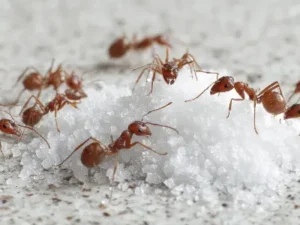
Whether you’ve caught a glimpse of an ant trail across your counter, or you’re finding ants hidden in your cupboards, you likely aren’t very happy to see them. And this time of year, you’re most likely to come across sugar ants.
“Sugar ant” is a catch-all term for several specific species, including Pharaoh ants, ghost ants, Argentine ants, and odorous house ants.
These ants can be difficult to distinguish due to their size, and improper treatment strategies can only worsen the issue. That’s why we’ve compiled this guide so you can learn some DIY strategies to control a sugar ant problem before it becomes a severe infestation.
DIY Sugar Ant Removal Strategies
If your ant issue has evolved into a major infestation, DIY control may not be enough to resolve the issue. At the first sign of ant activity, taking these steps can prevent the issue from growing and keep ants away for a while.
- Remove any food sources. Leaving out scraps of food, sugary spills, or lingering stickiness, or even bowls of pet food, are all considered food sources by ants. If ants are frequently headed toward your pet’s bowl, try setting the bowl in a larger, shallow dish of water, to drown any ants that take that path again. Bottles of syrup that are leaking even slightly could also attract ants, so you may want to move them to the refrigerator or store them in an airtight container.
- Clean surfaces and floors with vinegar. First clean off every crumb, then spray white vinegar across counters, cupboards, and floorboards to clean and remove their scent trails. You can also try sprinkling lines of baking soda across common entry points, such as doorways, to prevent some ants from crossing.
- Pour boiling water into the center of the ant nest. If you’re able to locate the source of the colony, you can pour a few gallons of boiling water into the center of it to eradicate the queen. This strategy can be effective, but it often needs multiple attempts. Be careful of nearby surfaces, as the boiling water can harm plants or grass, or soak into wood.
What Makes Sugar Ants Different Than Other Ants?
Sugar ants are named after their interest in sugary foods such as syrup and fruit. Other species (such as carpenter or fire ants) are attracted to different foods, such as protein or meat, and don’t produce a strong smell when they’ve died. Sugar ants are also smaller than many species of ants, commonly only 2.5-3 millimeters long.
Ready for pest, lawn, or sprinkler service?
Ready for qualified professionals to help keep your home, business, or lawn in pristine condition?
Which Types of Ants Are Considered Sugar Ants?
Ghost Ants
Named for their pale, almost translucent legs and abdomen, these tiny pests are notoriously difficult to spot until you have a full-blown infestation on your hands. They’re only about 1.3-1.5 millimeters long, making them some of the smallest ants you’ll deal with.
You’ll often find them nesting in wall voids, behind baseboards, or in potted plants.
Pharaoh Ants
These light yellow to reddish-brown ants are small, typically around 2 millimeters, and are known for being incredibly stubborn to eliminate. What makes them particularly tricky is their ability to “bud,” meaning when they sense danger, the colony will split into multiple satellite colonies throughout your home.
They’re attracted to sugary and greasy foods alike, and they’re notorious for invading kitchens, bathrooms, and even hospital settings due to their attraction to moisture.
Odorous House Ants
Odorous house ants are the classic “sugar ant” most people picture. These dark brown to black ants measure about 2.5-3 millimeters and are easily identified by the rotten coconut smell they produce when crushed.
They nest both indoors and outdoors, often making their homes in wall voids, under flooring, or beneath mulch and debris outside. Odorous house ants travel in large numbers and are quick to establish scent trails leading straight to your pantry.
Argentine Ants
Ranging from light to dark brown, these ants are about 2-3 millimeters long and form massive supercolonies that can contain millions of workers. Unlike some ant species, Argentine ant colonies cooperate with one another rather than competing, allowing them to spread rapidly across your property.
Why Is it so Difficult to Remove Sugar Ants?
If you’re struggling to contain a sugar ant infestation, you’ve definitely realized that they love to come back again and again. Many at-home treatments only target visible ants, which don’t remove the problem at the source, including:
- The ant colony could be hiding inside your home’s walls, small cracks or crevices, or outside your property, such as in the yard. If you’re only taking care of the ants who walk into your daily routine, you haven’t removed the majority of them.
- Pheromone scent trails are a biological strategy that sugar ants use to tell other ants in the colony where the food sources are. It’s important to wipe down surfaces and do your best to remove these trails, so that they aren’t always drawn back to the same spot.
- Leaving out food and water is practically inviting ants back into your home. Keep their common entry points, such as cracks or door gaps, sealed, and store food and water where they can’t reach it, so they lose interest in your home.
What Happens if You Ignore a Sugar Ant Issue?
Letting a sugar ant colony continue to live near your home will only cause more problems for you. By starting the removal process early, you can prevent structural property damage, loss of food, and surface contamination. When sugar ant colonies are left to grow, they can include up to 300,000 to 500,000 ants.
Early intervention is extremely important, so don’t let them keep using your home as their home. That’s why it’s crucial to bring in professional ant exterminators.
Schedule a Professional Evaluation for Your Home
If you’ve been fighting off sugar ants for far too long, you’re not the only one. Ants are very persistent pests and can be a struggle to fully remove, especially if their nest is hidden somewhere within your home.
Contact Sorko Lawn and Pest Control today to get an expert’s opinion on your property, and let us handle the ant removal for you.
Back to Ant Control