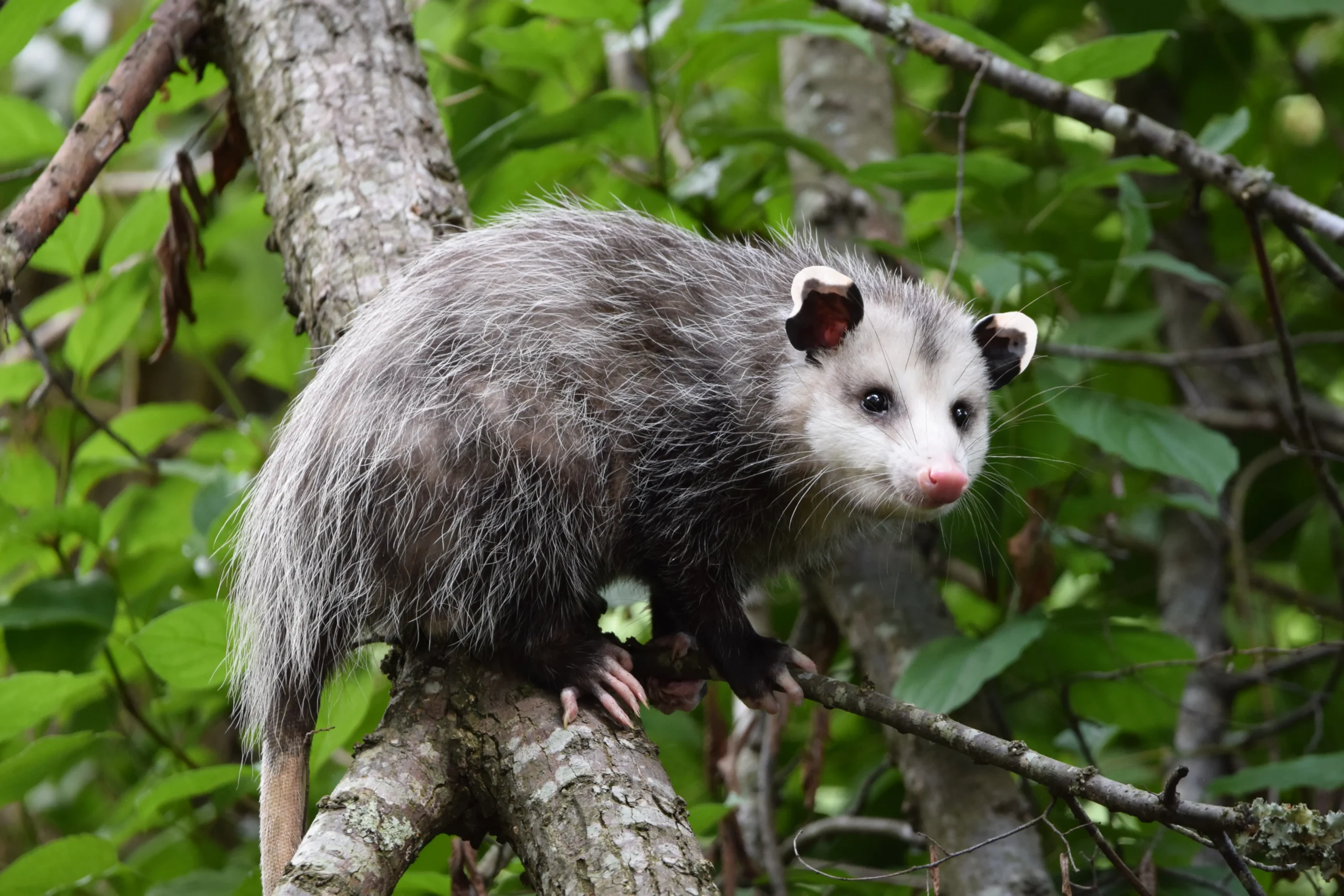
Finding an opossum around your home can leave you wondering whether it is simply passing through or has found a reliable source of food, shelter, or access to your home. Opossums in Florida are adaptable animals that can live in wooded areas as well as neighborhoods, where garbage, pet food, fruit, and other food sources may attract them.
Sorko Lawn and Pest Control provides professional opossum control throughout Central Florida. If an opossum has entered your attic, taken shelter around your home, or continues returning to your property, our team can help identify conditions attracting the animal and determine an appropriate approach to opossum removal.
Opossum or Possum?
Although the terms are often used interchangeably, there is a distinction between “opossum” and “possum.” The animal commonly found throughout Florida is the Virginia opossum (Didelphis virginiana). It is the only marsupial native to Florida, and the only marsupial found naturally in the United States.
“Possum” is often used as a shortened version of “opossum” in everyday conversation. The word can also refer to a different group of marsupials native to Australia and nearby regions. When Florida homeowners see a grayish animal with a pointed face and long, hairless tail around their property, they are generally seeing a Virginia opossum.
Opossums in Florida
Virginia opossums are highly adaptable and can live in a variety of environments. They are common in urban and suburban areas. Their ability to climb, forage at night, and use existing shelter allows them to take advantage of opportunities around homes. Here are some things to know about opossums in Florida:
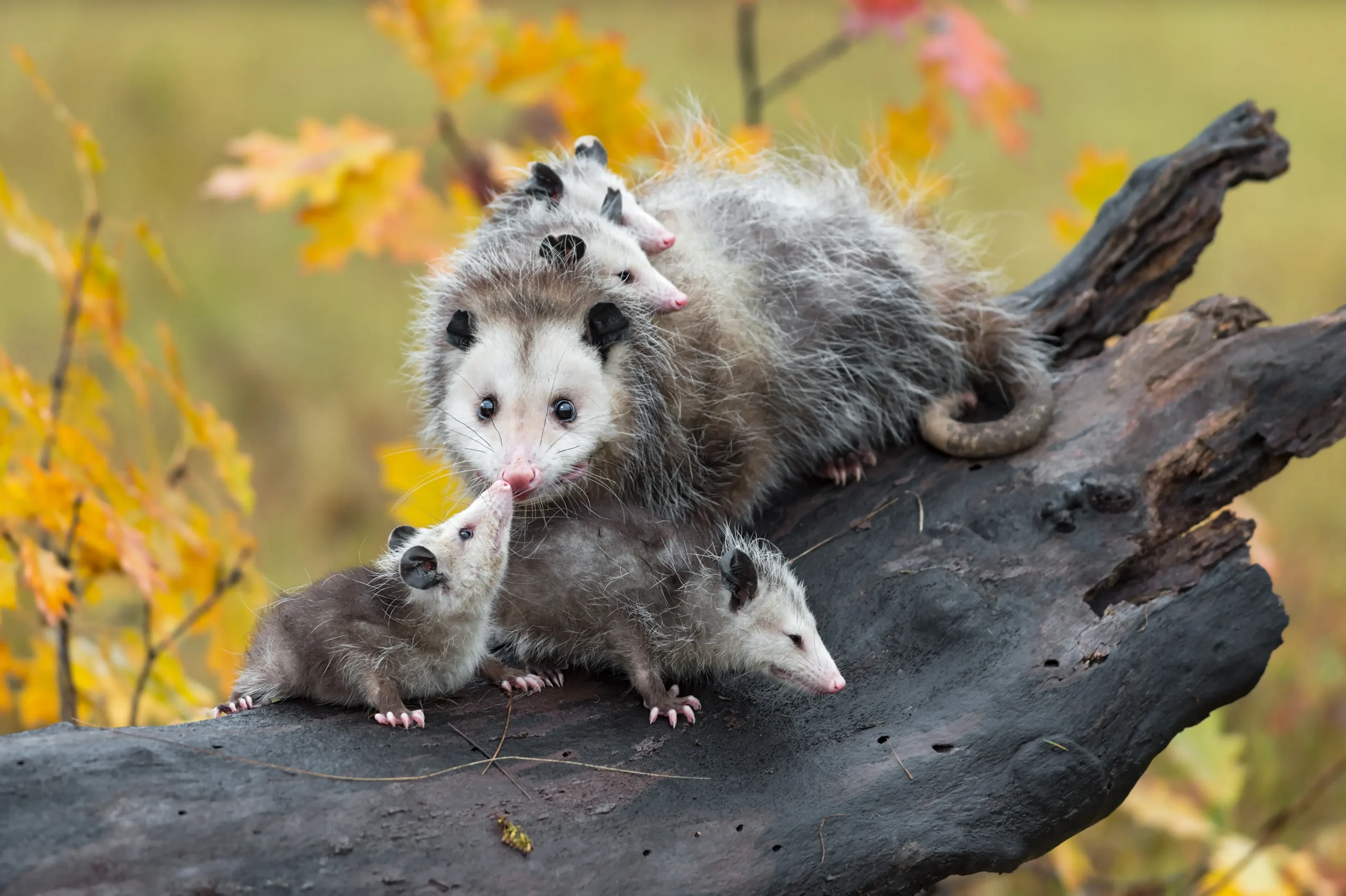
- Appearance: Virginia opossums have grayish-white fur, a pointed white face, small ears, dark eyes, and a long, mostly hairless tail. Adults are roughly the size of a house cat, although their weight and size can vary.
- Behavior: Opossums are primarily nocturnal and generally prefer to avoid people. They are capable climbers and may travel along fences, trees, and other elevated surfaces while searching for food or shelter.
- Habitat: They can live in woodlands, wetlands, agricultural areas, and developed neighborhoods. Around homes, they may shelter beneath decks, porches, sheds, brush piles, or other protected areas. They may also enter attics or other parts of a structure through an opening.
- Food Sources: Opossums are opportunistic omnivores and eat a wide variety of foods, including insects, fruits, other plant material, carrion, and small animals.
- What Attracts Them: Outdoor pet food, unsecured garbage, fallen fruit, compost, and other accessible food sources can attract opossums to residential properties.
Opossums can provide some ecological benefits. They eat insects and other small animals and also scavenge carrion. Their presence around a property is not necessarily a sign of a problem. The concern begins when an opossum repeatedly visits a home, takes shelter in an unwanted location, or gains access to the structure.
Are Opossums Dangerous?
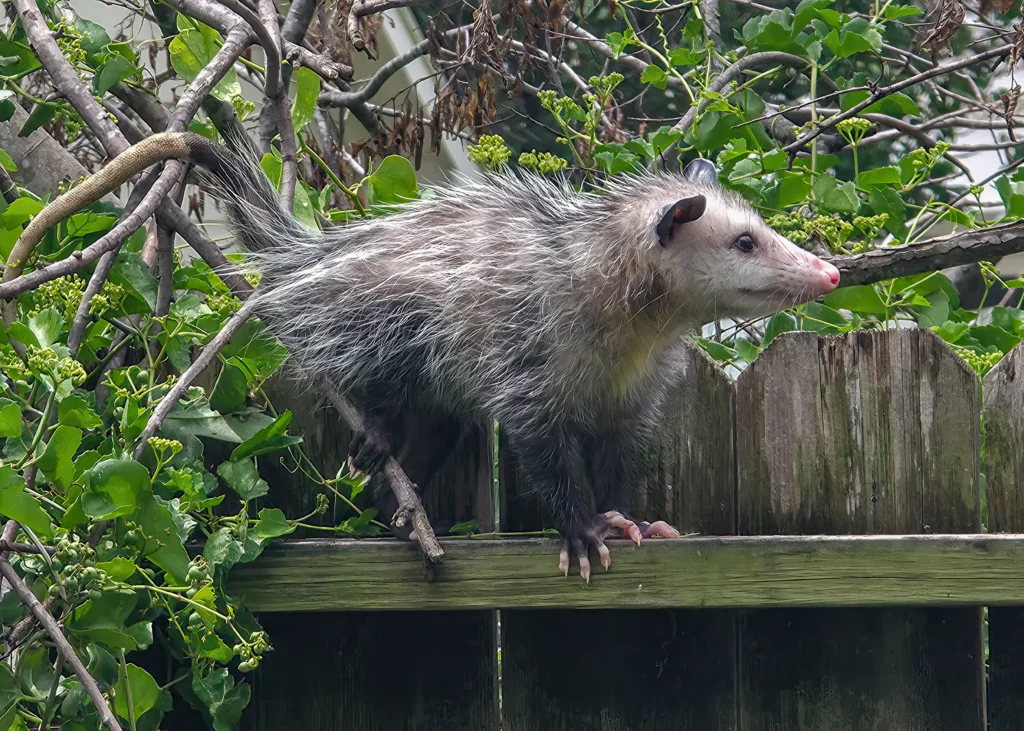
Opossums generally prefer to avoid people rather than confront them. If an opossum feels threatened or cornered, it may hiss, bare its teeth, or display other defensive behaviors. While these animals are not generally aggressive, homeowners should avoid trying to handle them. Wild animals may bite or scratch when frightened, and opossums can carry fleas, ticks, other parasites, and certain infectious organisms.
Opossums have a relatively low susceptibility to rabies, and documented cases are uncommon, although they are not completely immune. Anyone bitten or scratched by an opossum should seek appropriate medical attention. An opossum that enters a home can also create property concerns, particularly in an attic, where it may disturb insulation, leave droppings, create odors, or damage materials while seeking shelter.
Get a custom treatment plan tailored to you!
Click below to leave your information and we will call you right back!
Signs You Might Have an Opossum Problem
Spotting an opossum in your yard at night is not necessarily a sign that it has established a den on your property. However, recurring activity or signs of entry into your home can suggest that the animal has found a place to shelter. Signs of opossum activity may include:
- Nighttime Sightings: Opossums are primarily nocturnal, so seeing one after dark is not unusual.
- Overturned Garbage: Opossums may investigate garbage cans and other accessible food sources.
- Missing Pet Food: Outdoor food bowls can attract opossums as well as other wildlife.
- Droppings: Feces around sheltered areas, near food sources, or inside an attic can indicate animal activity.
- Scratching or Rustling: Sounds coming from an attic or other enclosed area at night may indicate that an animal has entered the structure.
- Tracks: Footprints around soft soil, dusty areas, or other surfaces can provide evidence of wildlife activity.
- Strong Odors: Unusual odors may occur when an animal is spending time in an enclosed area or when waste accumulates.
- Entry Points: Openings around the roofline, vents, soffits, or other parts of the structure can provide potential access.
If an opossum keeps appearing in the same area or you notice signs of activity around your home, a professional inspection can help determine whether the animal is simply passing through or has found a way inside.
What Should You Do If You Encounter an Opossum?
When you encounter an opossum in your yard, the best response is usually to leave it alone and give it a clear path to leave. These animals typically try to avoid people, and an opossum that has wandered onto your property may move on without intervention. Children and pets should be kept away, particularly if the animal seems trapped or threatened.
Avoid approaching, chasing, picking up, or attempting to corner the opossum. You should also avoid feeding it, since accessible food can encourage repeated visits. Reduce potential attractants by bringing pet food inside after dark, securing garbage, picking up fallen fruit, and keeping food scraps away from outdoor areas.
An opossum that enters the home or repeatedly returns may require a closer look. Professional wildlife control can help determine how the animal is accessing the property and whether exclusion work can address the entry point and reduce the likelihood of future activity.
Can You Remove an Opossum Yourself?
Some opossum activity can be addressed by homeowners, particularly when an animal is simply passing through the yard. Removing potential food and shelter can make your property less appealing, but an opossum that has entered an attic or another enclosed area presents additional concerns. Depending on the situation, homeowners can:
- Secure Food Sources: Keep garbage covered, bring pet food indoors, clean up fallen fruit, and remove other food sources from outside areas.
- Limit Hiding Places: Reduce clutter and other sheltered areas around the home where an opossum may choose to rest.
- Keep Your Distance: Do not attempt to grab, chase, or physically remove an opossum, as a frightened animal may bite or scratch.
- Leave Entry Points Alone: If an opossum may still be inside the home, do not seal a suspected opening until you know the animal has left.
- Get Professional Assistance: Repeated activity or an opossum inside the home may call for professional wildlife control and, when appropriate, opossum removal and exclusion.
There are Florida regulations governing the possession of wildlife. Opossums are classified as Class III wildlife, and homeowners should check current FWC requirements before attempting to capture or keep one.
FAQs About Opossum Control in Florida
Opossums can be surprisingly adaptable, which can leave homeowners with questions when one begins appearing regularly around the property. Below, we answer some common questions about opossums in Florida, including their behavior, diet, risks, and what to do when one gets inside a home.
Need help with recurring opossum activity? Sorko Lawn and Pest Control is here to help.
Yes. Virginia opossums are native to Florida and can live in wooded areas, wetlands, agricultural areas, and developed neighborhoods. They are particularly adaptable when food, water, and shelter are available.
Opossums are omnivores and opportunistic feeders. Their diet can include insects, fruits, other plant material, carrion, and small animals. Around homes, they may also be attracted to garbage, pet food, fallen fruit, and other accessible food sources.
Opossums generally prefer to avoid confrontation, but any wild animal can defend itself when cornered or handled. Keep dogs and cats away from an opossum rather than allowing them to investigate or chase it.
Hissing is generally a defensive response. An opossum that feels threatened may hiss, bare its teeth, or open its mouth in an attempt to discourage whatever it perceives as a threat. Giving the animal space is preferable to approaching it.
Yes. When extremely frightened, an opossum can enter an involuntary state in which it becomes limp and unresponsive. This defensive response is commonly called “playing dead.”
Scratching, rustling, or thumping sounds at night can indicate wildlife activity. Droppings, odors, disturbed insulation, and evidence of an entry point around the roofline can provide additional clues. Because other wildlife can produce similar signs, an inspection may be needed to identify the animal.
Professional Opossum Control in Central Florida
A single opossum seen crossing your yard may only be passing through, while repeated activity can indicate that your property offers food, shelter, or access the animal finds appealing. If an opossum has entered your attic, the situation may require a more involved response than an occasional outdoor sighting.
Sorko Lawn and Pest Control provides opossum control and opossum removal throughout Central Florida. We can help determine where the animal is active, identify potential ways it is accessing your home, and develop an appropriate approach for addressing unwanted wildlife and conditions that may lead to recurring activity.
For professional opossum control, contact Sorko Lawn and Pest Control for help dealing with unwanted wildlife on your property.
Back to Wildlife Control