Key Takeaways:
- Sugar ants are a catch-all group of tiny, sweet-seeking ant species that are notoriously difficult to distinguish and eliminate.
- Successful sugar ant control requires eliminating all access to microscopic food crumbs, sticky residues, trash cans, and standing moisture sources.
- Effective long-term prevention depends on sealing exterior structural gaps and managing landscaping to block outdoor pathways into the home.
- Misapplied DIY chemical treatments often backfire by triggering colonies to split and multiply rather than eliminating them.
What Are “Sugar Ants,” Anyway?
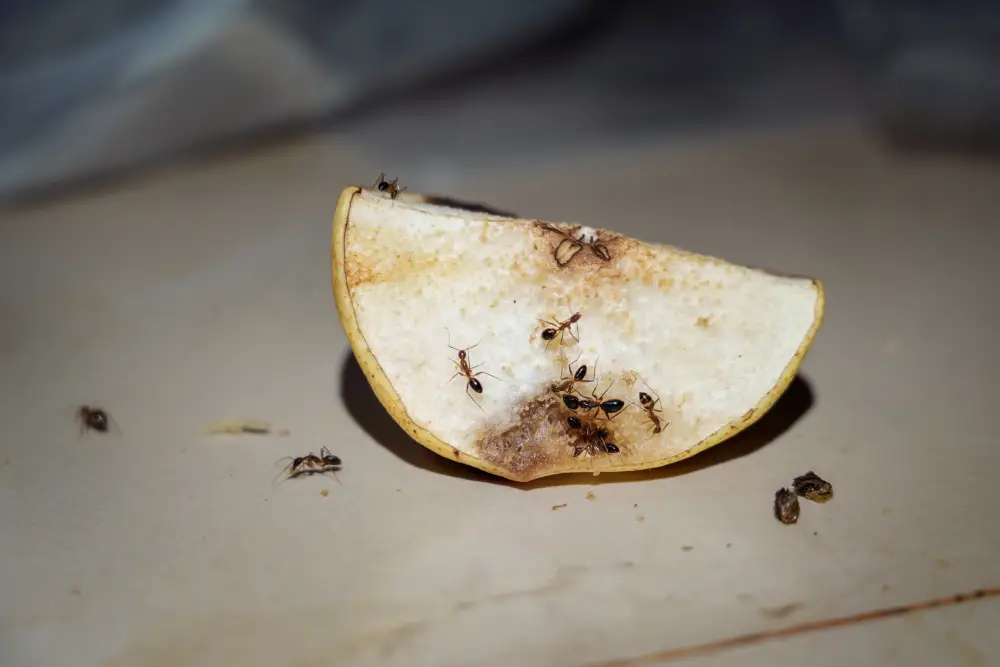
“Sugar ant” is a catch-all term for several species of ant that are attracted to sweet things, including Pharaoh ants, ghost ants, Argentine ants, and odorous house ants. When you catch a glimpse of an ant trail across your counter or find ants in your cupboards, there’s a good chance you’re dealing with sugar ants.
These ants can be difficult to distinguish due to their size, and improper treatment strategies can only worsen the issue. That’s why we’ve compiled this guide so you can learn some DIY strategies on how to get rid of sugar ants and regain your peace of mind.
Tips to Eliminate Ghost Ants and Pharaoh Ants (“Sugar Ants”) from Your Home
Sugar ants seek out the same things as other types of ants: food, moisture, and shelter. The difference with sugar ants is that they’re highly motivated by sweet, sugar-based foods, especially. While other ant species have more varied diets, species like Pharaoh ants, ghost ants, and odorous house ants are usually found in or near the kitchen or where food is consumed, places they’re most likely to find sugary items and residues.
Therefore, the most important thing you can do to eliminate sugar ants (and prevent them from returning) is to remove access to sugary foods. And it doesn’t take much to attract them – even crumbs and residues are enough.
Tip #1 – Remove Any Possible Food and Water Sources
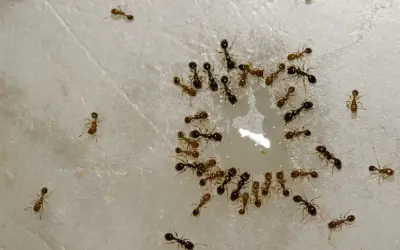
Sugar is found in almost everything, and ants need very little water, so this is easier said than done. This checklist is designed to help you think of possibilities you may not have realized:
- Leaving out scraps of food, sugary spills, or lingering stickiness, or even bowls of pet food, are all considered food sources by ants.
- If ants are frequently headed toward your pet’s bowl, try setting the bowl in a larger, shallow dish of water, as a “moat” to prevent ants from taking that path again.
- Bottles of syrup that are leaking even slightly could also attract ants, so you may want to move them to the refrigerator or store them in an airtight container.
- Homeowners focus on counters and pantries, but the kitchen trash can is usually the primary anchor holding sugar ants in a kitchen. Even if a trash can has a lid, tiny ghost or pharaoh ants can slip right through the hinges. Wash the physical plastic trash bin out with bleach or vinegar once a week and keep the bin pulled a few inches away from the wall so it isn’t touching the drywall (which gives them a bridge).
Tip #2 – Clean Surfaces and Floors with Vinegar to Disrupt Ant Trails
Ants have a sophisticated system of communication with scent trails inviting more ants to join after a food source is discovered. That’s why, if you only get rid of the food itself, it’s typically only a matter of time before more ants show up to investigate. You need to get rid of the pheromone trails so ants have a harder time finding their way back to your kitchen.
- First, clean off every crumb, then spray white vinegar across counters, cupboards, and floorboards to clean and remove their scent trails.
- You can also try sprinkling lines of baking soda across common entry points, such as doorways, to prevent some ants from crossing.
Tip #3 – Identify and Seal Entry Points
Sugar ants thrive inside human habitats, but generally, they start as outdoor colonies. A few scouts may wander in, searching for food, and once they find it, they summon more ants to join them. When this happens, it may only be a matter of time until the ants are fully moved in.
- Identify and seal potential entry points (also known as exclusion). Sugar ants will use the tiniest cracks to get inside.
- Aphids feed on landscaping plants and secrete a sweet substance called honeydew. Treat your garden plants for aphids and trim back any tree branches or bushes touching the side of the house. If a bush touches your wall, it acts as a direct highway over your exterior pesticide barrier.
Ready for pest, lawn, or sprinkler service?
Ready for qualified professionals to help keep your home, business, or lawn in pristine condition?
Why Is It So Difficult to Get Rid of Sugar Ants on Your Own?
If you’re dealing with an infestation of ghost ants, pharaoh ants, Argentine ants, or odorous house ants, you’re not alone. Many homeowners get stuck in a frustrating cycle of wiping down ants only to see them return the next morning.
Here’s why DIY sugar ant control often fails:
- The ant colony could be hiding inside your home’s walls, small cracks or crevices, or outside your property, such as in the yard. If you’re only taking care of the ants who walk into your daily routine, you haven’t removed the majority of them.
- Poorly applied treatments can cause more problems than they solve. For example, some species like pharaoh ants are known to “bud” or split into multiple colonies when they sense danger. This is often the result of spraying visible ants without a cohesive strategy to eliminate the entire colony.
- Leaving out food and water is practically inviting ants back into your home. It bears repeating because of how true it is – cleaning up food and water occasionally won’t solve your sugar ant problem. You must commit to eliminating food and water sources every day.
What Makes Sugar Ants Different Than Other Ants?
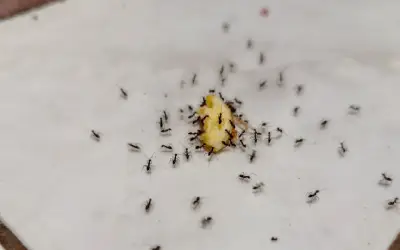
Sugar ants are named after their interest in sugary foods such as syrup and fruit. Other species (such as carpenter or fire ants) are attracted to different foods, such as protein or meat, and don’t produce a strong smell when they’ve died. Sugar ants are also smaller than many species of ants, commonly only 2.5-3 millimeters long.
>> How to Spot the Signs of an Ant Infestation
Which Types of Ants in Central Florida Are Considered Sugar Ants?
Ants are tiny, and people often have difficulty distinguishing similar species. That’s why ants are sometimes classified by their behavior or diet rather than by genus. When ants are highly attracted to sweets, syrups, sodas, and honeydew (the sticky substance left by aphids on plants), the name “Sugar Ant” serves as a functional description of the problem: “I have the ants that want sugar.”
Around the world, there are many types, but we’re going to talk about the four most common types of sugar ants in Florida: ghost ants, pharaoh ants, Argentine ants, and odorous house ants.
Ghost Ants
Named for their pale, almost translucent legs and abdomen, these tiny pests are notoriously difficult to spot until you have a full-blown infestation on your hands. They’re only about 1.3-1.5 millimeters long, making them some of the smallest ants you’ll deal with.
Ghost ants are notorious for nesting in tiny, elevated spaces rather than deep underground. Because they have a desperate need for high humidity, one of their absolute favorite indoor nesting sites is the damp soil of potted indoor houseplants.
- Pro Tip: If you see ghost ants but can’t find a trail on the floor, check your indoor plants. If you see ghost ants, move the plant outdoors temporarily. When buying new plants, always inspect the soil before bringing them inside.
Pharaoh Ants
These light yellow to reddish-brown ants are small, typically around 2 millimeters, and are known for being incredibly stubborn to eliminate. What makes them particularly tricky is their ability to “bud,” which means, if you spray them with a standard contact killer like Raid, you might kill 50 ants, but you will trigger the remaining colony to split into 3 or 4 new colonies, making your problem exponentially worse.
- Pro Tip: Put away the aerosol sprays entirely. If you suspect Pharaoh ants, use non-repellent baits or call a pro immediately. Never use anything that smells like a harsh chemical near their trails.
Odorous House Ants
Odorous house ants are the classic “sugar ant” most people picture. These dark brown to black ants measure about 2.5-3 millimeters and are easily identified by the smell they produce when crushed.
Odorous house ants travel in large numbers and are quick to establish scent trails leading straight to your pantry. Because these ants look like almost every other little black ant, homeowners often misidentify them and use the wrong treatment. You need to confirm their identity before you can target their massive trail networks effectively.
- Pro Tip: Perform the “Smash Test.” Crush a few of the ants between your fingers (or a paper towel) and take a sniff. If you smell a distinct, unpleasant odor resembling rotten coconuts, rancid blue cheese, or chemical pine, you are dealing with Odorous House Ants. This tells you that the main nest is likely outdoors under yard debris or mulch, rather than inside your walls.
Argentine Ants
Unlike some ant species, Argentine ant colonies cooperate with one another rather than competing, allowing them to spread rapidly across your property. Ranging from light to dark brown, these ants are about 2-3 millimeters long and form massive “supercolonies.”
Because their numbers are so overwhelming, simply placing a few bait stations in your kitchen is like trying to empty the ocean with a bucket — more workers will just keep coming from the yard.
- Pro Tip: You have to fight Argentine ants from the outside in. Focus your energy on creating a wide exterior perimeter. Keep a 12-inch gravel or bare-dirt buffer between your home’s foundation and your lawn mulch, and trim all tree branches so they don’t touch your roofline. This forces the supercolony to stay out in the yard where they belong.
Comparison Chart – Common Florida Sugar Ants
| Ant Species | Average Size | Distinct Characteristics | Common Nesting Sites |
| Ghost Ants | 1.3 – 1.5 mm | Translucent legs and abdomen; extremely hard to see. | Wall voids, potted plants, baseboards. |
| Pharaoh Ants | ~2.0 mm | Light yellow to reddish-brown; prone to “budding.” | Kitchens, bathrooms, near indoor pipes. |
| Odorous House Ants | 2.5 – 3.0 mm | Dark brown/black; smells like rotten coconut when crushed. | Under mulch outdoors, inside wall crevices. |
| Argentine Ants | 2.0 – 3.0 mm | Light to dark brown; form massive, cooperative supercolonies. | Damp soil, beneath logs, stepping stones. |
What Happens if You Ignore a Sugar Ant Issue?
Letting a sugar ant colony continue to live near your home will only cause more problems for you. By starting the removal process early, you can prevent loss of food, surface contamination, and prolonged mental stress. When sugar ant colonies are left to grow, they can include up to 300,000 to 500,000 ants.
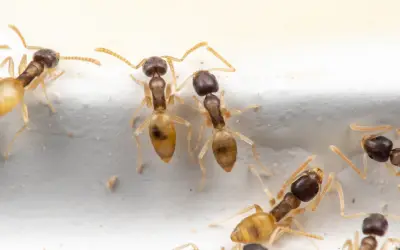
Early intervention is extremely important, so don’t let them keep using your home as their home. That’s why it’s crucial to bring in professional ant exterminators.
>> Tips on how to prevent your next ant infestation
Eliminate Sugar Ants for Good – Schedule a Professional Evaluation for Your Home
If you’re tired of fighting off ghost ants, pharaoh ants, Argentine ants, odorous house ants, or any other type of sugar ants, stop wasting your time and money on DIY solutions that don’t work. Let the professionals handle it instead.
At Sorko Lawn and Pest Control, our ant control experts understand the unique pest patterns of Central Florida. We can identify the exact species invading your space, locate the hidden nests, and implement a targeted, safe elimination plan to keep them gone for good.
Ready to get your kitchen back? Contact Sorko Lawn and Pest Control today to schedule your inspection, and let us handle the ant removal for you.